
Lace wigs are part of everyday life for a lot of women — which means real life happens while you’re wearing one. You get tired and want to sleep. The pool looks inviting. You’ve got a workout scheduled. So the question naturally comes up: can your lace wig handle all that, or do you have to take it off every time?
The short answer is yes, you can do all three — but each one has rules, and ignoring them is a fast way to ruin your wig or damage your edges. Our team breaks down sleeping, swimming, and working out in a lace wig, with the do’s, don’ts, and honest trade-offs for each.
Can You Sleep in a Lace Wig?
Yes — but how you do it matters a lot. Plenty of women sleep in their lace wigs, especially when they have an adhesive install they want to preserve for a week or two. The key is protecting both the wig and your hairline overnight.
How to sleep in a lace wig safely
- Wrap with a satin or silk scarf, or wear a satin bonnet. This reduces friction that causes tangling and frizz.
- Use a satin or silk pillowcase as a backup layer of protection.
- Loosely wrap or pineapple longer hair to preserve the style and prevent matting.
- Avoid going to bed with damp hair — it tangles and can develop odor.
- Don’t sleep with edge control hardened on your hairline — it dries out your edges overnight.
Can You Swim in a Lace Wig?
Yes, but it’s the hardest on your wig of the three. Water — especially chlorinated pool water and salt water — is rough on both the hair and the adhesive. You can swim in a lace wig, but you need to prepare and accept some trade-offs.
Before you swim
- Use a strong, waterproof adhesive if you want the wig to stay secure. Glueless installs can lift in water.
- Tie the hair up in a bun or braid to minimize tangling and water exposure.
- Apply a leave-in conditioner before swimming as a barrier against chlorine/salt.
- Consider a swim cap over the wig for serious swimming — it protects both hold and hair.
After you swim
- Rinse immediately with clean, cool water to remove chlorine or salt
- Wash and deep condition as soon as you can — chlorine and salt are extremely drying
- Air-dry on a stand and detangle gently
Can You Work Out in a Lace Wig?
Yes — this is the most common of the three, and very manageable with the right setup. Many women work out in their wigs daily. The main challenge is sweat, which breaks down adhesive and can cause lifting and scalp irritation.
How to work out in a lace wig
- Use a sweat-resistant adhesive, or go glueless with a tightened elastic band (often better for heavy sweat)
- Wear a moisture-wicking headband along the hairline to absorb sweat and protect the bond
- Tie the hair up to keep it off your neck and reduce sweat absorption
- Choose breathable constructions — full lace and 360 breathe better than dense lace fronts
- Apply scalp protectant before to create an oil/sweat barrier
After your workout
- Let the wig and scalp air out — take it off if you can
- Cleanse the hairline to remove sweat and prevent irritation
- Refresh with a leave-in spray if the hair needs it
- Don’t leave sweaty installs in too long — sweat buildup causes itch and odor
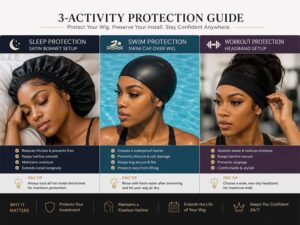
Side-by-Side: The Three Activities
| Activity | Can You? | Main Risk | Best Setup |
|---|---|---|---|
| Sleeping | Yes | Tangling, edge damage | Satin bonnet/scarf; take off if glueless |
| Swimming | Yes, with care | Chlorine/salt drying, lifting | Waterproof glue, swim cap, rinse + deep condition after |
| Working out | Yes | Sweat breaking down hold | Glueless band + wicking headband; cleanse after |
The Universal Rules for an Active Lifestyle
Across all three activities, a few principles always apply:
- Protect the hair from friction and moisture loss — satin, leave-ins, tying up
- Secure the wig properly for the activity — band for sweat, waterproof glue for water
- Cleanse and recondition after — especially after sweat or water exposure
- Give your scalp and edges regular breaks — active wear is more stressful on your hairline
- Consider a dedicated “active” wig — an older or more durable unit you don’t mind stressing, saving your best piece for everyday looks
What About Showering in a Lace Wig?
A quick bonus, since it comes up: you can shower in a lace wig with a secure adhesive install, but the same rules as swimming apply — water and steam stress the hair and the bond. If you shower in it, keep the hair out of direct water flow when possible, avoid hot water on the wig, and recondition regularly. For everyday showering, most women find it easier to wear a shower cap and keep the wig dry.
Frequently Asked Questions
Can you sleep in a lace front wig every night?
You can, especially with an adhesive install you want to preserve, as long as you protect it with a satin bonnet or scarf nightly. However, if your install is glueless, taking the wig off at night extends its lifespan and lets your scalp and edges rest. Always sleep on satin or silk, never cotton.
Will swimming ruin my lace wig?
Swimming won’t instantly ruin it, but chlorine and salt water are very drying and will shorten the wig’s lifespan over time. Use a waterproof adhesive (or a swim cap), rinse immediately after, and deep condition as soon as possible. For frequent swimming, use a dedicated older or synthetic wig rather than your best human hair unit.
How do I keep my wig secure while working out?
Sweat breaks down adhesive, so a tightened glueless install with an elastic band often holds better than glue during workouts. Wear a moisture-wicking headband along the hairline, apply scalp protectant beforehand, and cleanse your scalp after to prevent irritation.
Can I shower with my lace wig on?
Yes, with a secure adhesive install, but water and steam stress the hair and bond. Keep the hair out of direct water flow, avoid hot water, and recondition regularly. Many women find it easier to wear a shower cap and keep the wig dry for everyday showering.
What should I sleep in to protect my wig?
A satin or silk bonnet or scarf, ideally with a satin/silk pillowcase as backup. Cotton causes friction that tangles the wig and breaks your baby hairs. Satin protection every night is the single most important habit for sleeping in a wig.
Does sweat damage a lace wig?
Sweat breaks down adhesive (causing lifting) and, combined with product buildup, can irritate the scalp and create odor. It doesn’t permanently damage the hair if you cleanse and recondition after workouts. Use a sweat-resistant setup and don’t leave sweaty installs in too long.
Should I get a separate wig for the gym and pool?
Many active women do. Keeping a durable or synthetic “knockaround” unit for the gym, pool, and sleeping spares your best human hair wig from the activities that wear wigs out fastest. It’s a practical strategy if an active lifestyle is part of your routine.
How do I protect my wig hair from chlorine?
Apply a leave-in conditioner before swimming as a barrier, tie the hair up, consider a swim cap, rinse immediately with clean water after, and deep condition as soon as possible. Wig hair can’t self-moisturize like natural hair, so manual reconditioning after chlorine exposure is essential.
Continue Learning
- [Internal link to Blog #1] The Complete Guide to Lace Wigs
- [Internal link to Blog #9] How to Wash a Lace Wig
- [Internal link to Blog #17] Why Is My Lace Lifting? How to Keep Your Wig Secured
- [Internal link to Blog #16] Why Is My Lace Wig Itchy?
- [Internal link to Blog #3] How to Install a Lace Wig: Step-by-Step