
An itchy lace wig isn’t just annoying — it can make you want to rip the whole thing off in the middle of your day. And constantly scratching at your scalp under a wig isn’t just uncomfortable; it can disrupt your install and even irritate your skin further.
The good news: wig itch almost always has a specific, identifiable cause, and most causes are fixable. Our team works with the actual materials these wigs are made from, so we can tell you exactly what tends to trigger irritation — from the adhesives to the cap to the way the hair was processed at the factory.
The Main Causes of an Itchy Lace Wig
Let’s work through the common culprits one at a time, from most to least common.
1.Adhesive Irritation or Allergy
What’s happening: Lace glues, tapes, and Got2B-type products contain chemicals that many people’s skin reacts to. The reaction ranges from mild itching to redness, bumps, and burning.
Telltale sign: The itch is concentrated right at the hairline where the adhesive sits.
THE FIX: Switch to a glueless install. If you must use adhesive, patch-test it on your inner arm 24 hours before, apply a skin protectant barrier first, and choose adhesives labeled for sensitive skin. Remove adhesive thoroughly with proper remover.
2.Chemical Residue in a New Wig
What’s happening: New wigs arrive with factory processing chemicals, silicone coatings, and sometimes residual dye or acid from the manufacturing process. These can irritate sensitive skin on first wear.
Telltale sign: The itch starts with a brand-new wig and improves after washing.
THE FIX: Always wash a new wig before wearing it for the first time, using sulfate-free shampoo and a deep conditioner. This removes the factory coating and residual chemicals. (Consultez notre guide de lavage.)
3.Une casquette rugueuse ou non respirante
What’s happening: Certains bonnets de perruque sont faits de matériaux grossiers, maille synthétique qui gratte le cuir chevelu ou emprisonne la chaleur. La friction et la chaleur provoquent toutes deux des démangeaisons.
Telltale sign: Les démangeaisons sont partout sur le cuir chevelu, pas seulement la racine des cheveux, et s'aggrave plus vous le portez longtemps.
THE FIX: Portez un vêtement lisse, bonnet de perruque respirant en dessous - satin, bambou, ou une casquette en nylon souple. Ceux-ci créent une barrière douce entre la calotte rugueuse et votre cuir chevelu. Certaines personnes appliquent également une fine couche d'huile pour cuir chevelu ou sans rinçage avant le capuchon..
4.Sueur et chaleur emprisonnées
What’s happening: Les perruques emprisonnent la chaleur contre le cuir chevelu. La sueur s'accumule, se mélange au produit, et irrite la peau, surtout par temps chaud ou pendant l'exercice.
Telltale sign: Les démangeaisons sont pires quand tu as chaud, transpiration, ou j'ai porté la perruque pendant de nombreuses heures.
THE FIX: Choisissez des constructions plus respirantes (la dentelle complète respire mieux, alors 360, puis devant en dentelle). Enlevez la perruque pour laisser votre cuir chevelu s'aérer. Utilisez un bonnet qui évacue l'humidité. Gardez le cuir chevelu propre. En été, envisager une densité plus légère et des séances de port plus courtes.
5.Cuir chevelu sec
What’s happening: Couvrir votre cuir chevelu avec une perruque peut le dessécher, especially if you’re not moisturizing underneath. Dry scalp flakes and itches.
Telltale sign: Flaking, tightness, and itch that’s there even without the wig.
THE FIX: Moisturize your scalp before installing — a lightweight scalp oil or moisturizer. Keep your natural hair and scalp hydrated underneath. Don’t neglect scalp care just because it’s hidden under a wig.
6.Product Buildup Under the Wig
What’s happening: Edge control, gel, dry shampoo, and styling products build up on the scalp and hairline, clogging and irritating the skin.
Telltale sign: Itch develops after several days of wear without cleansing.
THE FIX: Cleanse your scalp and hairline regularly. Don’t leave installs in for too long without taking the wig down to clean underneath. Remove edge control fully at night.
7.A True Allergy (Latex or Adhesive Components)
What’s happening: Some people are genuinely allergic to components in lace adhesives, certain cap materials, or latex bands. This is a real immune reaction, not just irritation.
Telltale sign: Significant redness, swelling, hives, bumps, or burning — not just itch. Reaction is consistent and sometimes severe.
THE FIX: Stop using the suspected product immediately. Switch to hypoallergenic, latex-free alternatives. Patch-test everything. If reactions are significant, see a dermatologist or allergist — this is a medical issue, not just a styling one.
Tableau de dépannage rapide
| Où/quand ça démange | Cause probable | Première chose à essayer |
|---|---|---|
| À la racine des cheveux seulement | Irritation adhésive | Allez sans colle; colle pour test de patch |
| Perruque toute neuve | Résidus chimiques d'usine | Laver avant de porter |
| Partout, s'aggrave avec le temps | Casquette rugueuse/chaude | Capuchon en satin ou en bambou en dessous |
| Quand il fait chaud ou qu’on transpire | Chaleur/sueur emprisonnées | Casquette respirante; faire des pauses |
| Floconneux, serré, même sans perruque | Cuir chevelu sec | Hydrater le cuir chevelu |
| Après des jours d'usure | Accumulation de produit | Nettoyer régulièrement le cuir chevelu |
| Rougeur, bumps, swelling | Allergie possible | Arrêter le produit; voir un dermatologue |
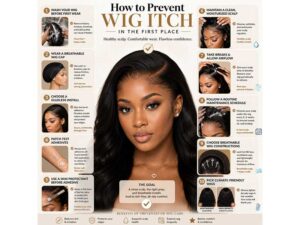
Comment prévenir les démangeaisons des perruques en premier lieu
La plupart des démangeaisons sont évitables. La check-list de prévention de notre équipe:
- Lavez toujours une nouvelle perruque before the first wear to remove factory chemicals
- Wear a breathable cap — satin or bamboo — between your scalp and the wig
- Go glueless when possible to avoid adhesive irritation entirely
- Patch-test adhesives 24 hours before use on sensitive skin
- Use a skin protectant barrier if you do use adhesive
- Keep your scalp clean and moisturized underneath
- Take the wig off regularly to let your scalp breathe
- Don’t leave installs in too long — clean underneath every 1-2 weeks
- Choose breathable constructions and appropriate density for your climate
- Remove product fully at night
Soothing an Already-Itchy Scalp
If your scalp is already irritated, here’s how to calm it:
- Take the wig off and let your scalp breathe
- Cleanse gently to remove product, transpirer, and residue
- Apply a soothing scalp treatment — aloe vera, hamamélis, ou un produit pour le cuir chevelu à base d'arbre à thé/menthe poivrée (dilué)
- Hydrater avec une huile légère pour le cuir chevelu
- Donnez-lui des jours de repos avant votre prochaine installation
- Identifiez et éliminez le déclencheur avant de rentrer
Ne provoquez pas de démangeaisons importantes en grattant sous la perruque – cela peut briser la peau, perturber votre installation, et aggraver l'irritation. Si votre cuir chevelu est vraiment inconfortable, enlève la perruque, trouver la cause, et abordez-le. Une perruque doit être suffisamment confortable pour oublier que vous la portez. Un inconfort persistant est un signal que quelque chose doit changer, pas quelque chose à endurer.
Foire aux questions
Pourquoi ma toute nouvelle perruque en dentelle me démange-t-elle autant?
Les nouvelles perruques contiennent des produits chimiques de traitement en usine, silicone coatings, et parfois du colorant résiduel qui peut irriter le cuir chevelu. Lavez toujours une nouvelle perruque avec un shampoing sans sulfate et un revitalisant en profondeur avant la première utilisation – cela élimine la plupart des résidus et résout généralement les démangeaisons liées à la nouvelle perruque..
Puis-je être allergique à ma perruque en dentelle?
Oui. Les allergies concernent généralement les composants adhésifs pour lacets, certain cap materials, ou des bandes de latex plutôt que les cheveux eux-mêmes. Les signes d'une véritable allergie comprennent une rougeur importante, swelling, hives, or burning (not just mild itch). Switch to hypoallergenic, produits sans latex et consultez un dermatologue si cela persiste.
Comment puis-je empêcher ma perruque de démanger à la racine des cheveux?
Les démangeaisons concentrées à la racine des cheveux signifient généralement une irritation adhésive. Switch to a glueless install, ou si vous utilisez de la colle, testez-le d'abord, appliquer une barrière protectrice cutanée, et choisissez une formule peau sensible. Remove adhesive thoroughly with proper remover.
Le bonnet de perruque provoque-t-il des démangeaisons?
Ça peut. Rugueux, les bonnets non respirants rayent le cuir chevelu et emprisonnent la chaleur. Portez un bonnet en satin lisse ou en bambou en dessous comme une barrière douce. This is one of the easiest fixes for all-over scalp itch.
Why does my wig itch more when it’s hot?
Wigs trap heat and sweat against the scalp. In hot weather, the buildup of sweat and product irritates the skin. Choose breathable constructions (la dentelle complète respire mieux), use a moisture-wicking cap, faire des pauses, and keep the scalp clean.
Will washing my wig stop the itching?
Often, yes — especially for a new wig, where factory chemical residue is the cause. Washing removes the silicone coating and processing chemicals. For itching caused by adhesives, allergies, or a rough cap, washing the wig won’t help; you’ll need to address those causes directly.
Is it normal for a lace wig to itch a little?
A brief adjustment period as you get used to the feel is normal, but ongoing or significant itching is not — it signals a fixable cause. A well-fitted, properly prepped wig should be comfortable enough to forget you’re wearing it.
When should I see a doctor about wig itching?
See a dermatologist if you have significant swelling, hives, blistering, oozing, or burning; if irritation doesn’t improve after removing the wig and switching products; or if you develop persistent bumps, sores, or hairline hair loss. These can indicate an allergy, contact dermatitis, or infection needing medical care.
Continuer l'apprentissage
- [Lien interne vers le blog #1] Le guide complet des perruques en dentelle
- [Lien interne vers le blog #9] How to Wash a Lace Wig
- [Lien interne vers le blog #3] Comment installer une perruque en dentelle: Étape par étape
- [Lien interne vers le blog #18] Peux-tu dormir, Nager, ou entraînez-vous avec une perruque en dentelle?
- [Lien interne vers le blog #6] Perruque en dentelle vs perruque synthétique