
Quick Answer
A wig usually feels tight because the cap is too small, the elastic band is over-tightened, the combs are pulling, or the hair underneath is not flat enough. Some snugness is normal, especially with glueless wigs, but pain is not. If a wig causes headaches, pressure around the temples, numbness, or soreness along the hairline, the fit needs to be changed.
Why Tightness Should Not Be Ignored
A secure wig can feel reassuring. A tight wig can feel like a problem you are trying to tolerate.
Many people assume discomfort is just part of wearing wigs, especially with lace wigs or glueless caps. But a wig should not leave you with a headache by lunchtime. It should not make your temples sore, press behind your ears, or make your edges feel pulled.
Fit matters because daily tension can affect comfort and hair health. A wig that is too tight may cause friction, pressure, or pulling in the same areas again and again.
The goal is not a loose wig. The goal is a secure wig that does not fight your head.
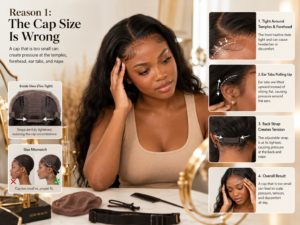
Reason 1: The Cap Size Is Wrong
The most common reason is simple: the cap is too small.
Many wigs are sold in an average cap size, but not every head is average. If your circumference, front-to-nape measurement, or ear-to-ear measurement is larger than the cap design, the wig may feel tight even before you adjust anything.
Signs the cap may be too small include:
- Pressure around the temples
- Wig sliding backward
- Ear tabs sitting too high
- Nape area pulling upward
- Headache after short wear
- Lace feeling stretched at the front
A cap that is too small can also make the hairline look less natural because the wig is under tension.
Reason 2: The Elastic Band Is Too Tight
Elastic bands are useful, especially for glueless wigs. They help the wig feel secure without glue. But if the band is too tight, it can create a pressure line around the head.
This often happens when buyers tighten the band to stop the lace from lifting. The wig may feel secure at first, but the pressure builds over time.
If the tightness is mainly at the back of the head or around the sides, the band may be the issue. Try loosening it slightly. A small adjustment can make a big difference.
Security should come from good fit, not from forcing the band to do all the work.
Reason 3: Combs and Clips Are Pulling
Combs can help keep a wig in place, but they can also create tension if they dig into the scalp or pull on natural hair.
Some people feel discomfort near the front combs, side combs, or nape comb. If the combs are placed over fragile edges or tight braids, the pressure can feel worse.
If your scalp feels sore in specific spots after removing the wig, check where the combs were sitting. You may need to reposition them, avoid using all of them, or choose a wig grip instead.
Combs are optional support tools. They should not feel like anchors pulling on your hair.
Reason 4: Your Natural Hair Is Too Bulky Underneath
Sometimes the wig is not the only issue. The hair underneath can affect the fit.
If your braids, twists, bun, or wig cap create too much bulk, the wig has less room to sit naturally. This can make the cap feel tight even if the wig size is technically correct.
Bulk near the crown can make the top look raised. Bulk near the nape can cause pulling. Thick braids near the hairline can create pressure at the front.
For a better fit, the foundation should be as flat and comfortable as possible. That does not mean painfully tight braids. It means even distribution.
Reason 5: Heat and Long Wear Can Make Tightness Worse
A wig that feels fine in the morning may feel tighter later in the day.
Heat, sweat, and scalp sensitivity can make pressure more noticeable. If you are wearing the wig for many hours, even mild tension can start to feel uncomfortable.
This is common in summer or during long events. The cap has not necessarily changed, but your tolerance may change as your scalp warms up.
If a wig feels tight only after several hours, consider shorter wear time, a looser band setting, or a more breathable cap for daily use.
Reason 6: The Wig Shape Does Not Match Your Head Shape
Two people can have the same head circumference and still need different fits.
Head shape matters. Some people have a flatter crown, wider temples, fuller nape, or higher occipital area at the back of the head. A wig cap may fit one measurement but still feel wrong in certain zones.
This is why a wig can feel tight at the temples but loose at the back, or secure at the back but lifted in front.
When this happens, the issue is not just size. It is shape compatibility.
When Tightness Is a Red Flag
Do not ignore strong discomfort.
A wig is too tight if it causes:
- Headaches
- Numbness
- Scalp soreness
- Pain around the temples
- Red marks that last
- Edge pulling
- Tension bumps
- Discomfort that continues after removal
If these happen, stop wearing the wig until the fit is adjusted. Repeated tension around the hairline can be risky, especially for fragile edges.
What You Can Try
Start with small adjustments.
Loosen the elastic band. Move or avoid combs that create pressure. Flatten the hair underneath more evenly. Try a wig grip instead of tightening the cap. Check whether the ear tabs are sitting correctly. If the wig has adjustable straps, loosen them one notch.
If the wig still feels painful, it may simply be the wrong cap size or shape.
Do not force a bad fit just because the hair looks good. A beautiful wig that hurts will not become your daily favorite.
What to Check Before Buying a Wig
Before buying, look for cap size information. Better listings usually include circumference, front-to-nape, ear-to-ear, and adjustable band details.
Check whether the wig comes in small, medium, or large cap options. Look for inside cap photos. Read reviews that mention comfort, tightness, head size, and band strength.
If you know average caps often feel tight, do not rely only on the word “adjustable.” Adjustable does not always mean larger. Sometimes it only means the wig can be made tighter.
Final Verdict
A wig should feel secure, not painful.
Tightness usually comes from cap size, band tension, comb placement, bulky hair underneath, heat, or head shape mismatch. The fix depends on the cause. Sometimes loosening the band helps. Sometimes removing a comb helps. Sometimes the wig is simply not the right fit.
Comfort is not a small detail. It affects whether you will actually wear the wig, how natural it looks, and how your scalp and edges feel over time.
If a wig gives you pain, listen to your head.
FAQ
Is a wig supposed to feel tight?
A wig can feel snug, but it should not hurt. Pain, headaches, numbness, or edge pulling are signs the fit needs adjustment.
Can a tight wig cause headaches?
Yes. Pressure from a small cap, tight band, or combs can lead to headaches, especially after several hours of wear.
How do I know if my wig cap is too small?
Common signs include temple pressure, ear tabs sitting too high, lace pulling, nape tension, and headaches soon after wearing.
Can I stretch a tight wig cap?
Some caps may loosen slightly with adjustment, but not all can be safely stretched. If the cap is truly too small, a larger size is better.
Are glueless wigs tighter than regular wigs?
They can feel tighter because they often rely on bands and cap tension for security. A good glueless wig should still feel comfortable.
Continue Learning
From here, we recommends these next:
- [Internal link to Blog ]The Complete Guide to Lace Wigs
- [Internal link to Blog ]How to Install a Lace Wig: The Ultimate Step-by-Step Guide (2026)
- [Internal link to Blog ]Lace Wig Density Guide: 130%, 150%, 180% — Which Density Is Right for You?
- [Internal link to Blog ]What Is a Lace Wig? A Beginner-Friendly Guide (2026)