
An itchy lace wig isn’t just annoying — it can make you want to rip the whole thing off in the middle of your day. And constantly scratching at your scalp under a wig isn’t just uncomfortable; it can disrupt your install and even irritate your skin further.
The good news: wig itch almost always has a specific, identifiable cause, and most causes are fixable. Our team works with the actual materials these wigs are made from, so we can tell you exactly what tends to trigger irritation — from the adhesives to the cap to the way the hair was processed at the factory.
The Main Causes of an Itchy Lace Wig
Let’s work through the common culprits one at a time, from most to least common.
1.Adhesive Irritation or Allergy
What’s happening: Lace glues, tapes, and Got2B-type products contain chemicals that many people’s skin reacts to. The reaction ranges from mild itching to redness, bumps, and burning.
Telltale sign: The itch is concentrated right at the hairline where the adhesive sits.
THE FIX: Switch to a glueless install. If you must use adhesive, patch-test it on your inner arm 24 hours before, apply a skin protectant barrier first, and choose adhesives labeled for sensitive skin. Remove adhesive thoroughly with proper remover.
2.Chemical Residue in a New Wig
What’s happening: New wigs arrive with factory processing chemicals, silicone coatings, and sometimes residual dye or acid from the manufacturing process. These can irritate sensitive skin on first wear.
Telltale sign: The itch starts with a brand-new wig and improves after washing.
THE FIX: Always wash a new wig before wearing it for the first time, using sulfate-free shampoo and a deep conditioner. This removes the factory coating and residual chemicals. (See our washing guide.)
3.A Rough or Non-Breathable Cap
What’s happening: Some wig caps are made of coarse, synthetic mesh that scratches the scalp or traps heat. The friction and heat both cause itching.
Telltale sign: The itch is all over the scalp, not just the hairline, and worsens the longer you wear it.
THE FIX: Wear a smooth, breathable wig cap underneath — satin, bamboo, or a soft nylon cap. These create a gentle barrier between the rough cap and your scalp. Some people also apply a thin layer of leave-in or scalp oil before the cap.
4.Trapped Sweat and Heat
What’s happening: Wigs trap heat against the scalp. Sweat builds up, mixes with product, and irritates the skin — especially in hot weather or during exercise.
Telltale sign: The itch is worse when you’re hot, sweating, or have worn the wig for many hours.
THE FIX: Choose more breathable constructions (full lace breathes best, entonces 360, then lace front). Take the wig off to let your scalp air out. Use a moisture-wicking cap. Keep the scalp clean. In summer, consider lighter density and shorter wear sessions.
5.Dry Scalp
What’s happening: Covering your scalp with a wig can dry it out, especially if you’re not moisturizing underneath. Dry scalp flakes and itches.
Telltale sign: Flaking, tightness, and itch that’s there even without the wig.
THE FIX: Moisturize your scalp before installing — a lightweight scalp oil or moisturizer. Keep your natural hair and scalp hydrated underneath. Don’t neglect scalp care just because it’s hidden under a wig.
6.Product Buildup Under the Wig
What’s happening: Edge control, gel, dry shampoo, and styling products build up on the scalp and hairline, clogging and irritating the skin.
Telltale sign: Itch develops after several days of wear without cleansing.
THE FIX: Cleanse your scalp and hairline regularly. Don’t leave installs in for too long without taking the wig down to clean underneath. Remove edge control fully at night.
7.A True Allergy (Latex or Adhesive Components)
What’s happening: Some people are genuinely allergic to components in lace adhesives, certain cap materials, or latex bands. This is a real immune reaction, not just irritation.
Telltale sign: Significant redness, swelling, hives, bumps, or burning — not just itch. Reaction is consistent and sometimes severe.
THE FIX: Stop using the suspected product immediately. Switch to hypoallergenic, latex-free alternatives. Patch-test everything. If reactions are significant, see a dermatologist or allergist — this is a medical issue, not just a styling one.
Quick Troubleshooting Table
| Where/When It Itches | Likely Cause | First Thing to Try |
|---|---|---|
| At the hairline only | Adhesive irritation | Go glueless; patch-test glue |
| Brand-new wig | Factory chemical residue | Wash before wearing |
| All over, worsens over time | Rough/hot cap | Satin or bamboo cap underneath |
| When hot or sweating | Trapped heat/sweat | Breathable cap; take breaks |
| Flaky, tight, even without wig | Dry scalp | Moisturize scalp |
| After days of wear | Product buildup | Cleanse scalp regularly |
| Redness, bumps, swelling | Possible allergy | Stop product; see dermatologist |
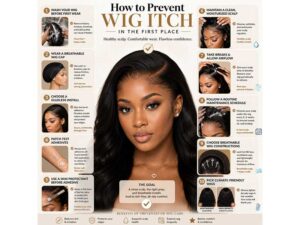
How to Prevent Wig Itch in the First Place
Most itching is preventable. Our team’s prevention checklist:
- Always wash a new wig before the first wear to remove factory chemicals
- Wear a breathable cap — satin or bamboo — between your scalp and the wig
- Go glueless when possible to avoid adhesive irritation entirely
- Patch-test adhesives 24 hours before use on sensitive skin
- Use a skin protectant barrier if you do use adhesive
- Keep your scalp clean and moisturized underneath
- Take the wig off regularly to let your scalp breathe
- Don’t leave installs in too long — clean underneath every 1-2 weeks
- Choose breathable constructions and appropriate density for your climate
- Remove product fully at night
Soothing an Already-Itchy Scalp
If your scalp is already irritated, here’s how to calm it:
- Take the wig off and let your scalp breathe
- Cleanse gently to remove product, sudor, and residue
- Apply a soothing scalp treatment — aloe vera, witch hazel, or a tea tree/peppermint scalp product (diluted)
- Moisturize with a lightweight scalp oil
- Give it rest days before your next install
- Identify and eliminate the trigger before going back in
Don’t push through significant itching by scratching under the wig — it can break the skin, disrupt your install, and make irritation worse. If your scalp is genuinely uncomfortable, take the wig off, find the cause, and address it. A wig should be comfortable enough to forget you’re wearing it. Persistent discomfort is a signal something needs to change, not something to tough out.
Preguntas frecuentes
Why is my brand-new lace wig so itchy?
New wigs carry factory processing chemicals, silicone coatings, and sometimes residual dye that can irritate the scalp. Always wash a new wig with sulfate-free shampoo and deep conditioner before the first wear — this removes most of the residue and usually resolves new-wig itching.
Can I be allergic to my lace wig?
Sí. Allergies are usually to the lace adhesive components, certain cap materials, or latex bands rather than the hair itself. Signs of a true allergy include significant redness, swelling, hives, or burning (not just mild itch). Switch to hypoallergenic, latex-free products and see a dermatologist if it persists.
How do I stop my wig from itching at the hairline?
Itch concentrated at the hairline usually means adhesive irritation. Switch to a glueless install, or if you use glue, patch-test it first, apply a skin protectant barrier, and choose a sensitive-skin formula. Remove adhesive thoroughly with proper remover.
Does the wig cap cause itching?
It can. Rough, non-breathable caps scratch the scalp and trap heat. Wear a smooth satin or bamboo cap underneath as a gentle barrier. This is one of the easiest fixes for all-over scalp itch.
Why does my wig itch more when it’s hot?
Wigs trap heat and sweat against the scalp. In hot weather, the buildup of sweat and product irritates the skin. Choose breathable constructions (full lace breathes best), use a moisture-wicking cap, take breaks, and keep the scalp clean.
Will washing my wig stop the itching?
Often, yes — especially for a new wig, where factory chemical residue is the cause. Washing removes the silicone coating and processing chemicals. For itching caused by adhesives, allergies, or a rough cap, washing the wig won’t help; you’ll need to address those causes directly.
Is it normal for a lace wig to itch a little?
A brief adjustment period as you get used to the feel is normal, but ongoing or significant itching is not — it signals a fixable cause. A well-fitted, properly prepped wig should be comfortable enough to forget you’re wearing it.
When should I see a doctor about wig itching?
See a dermatologist if you have significant swelling, hives, blistering, oozing, or burning; if irritation doesn’t improve after removing the wig and switching products; or if you develop persistent bumps, sores, or hairline hair loss. These can indicate an allergy, contact dermatitis, or infection needing medical care.
Continuar aprendiendo
- [Enlace interno al Blog #1] La guía completa de pelucas de encaje
- [Enlace interno al Blog #9] Cómo lavar una peluca de encaje
- [Enlace interno al Blog #3] Cómo instalar una peluca de encaje: Paso a paso
- [Enlace interno al Blog #18] ¿Puedes dormir?, Nadar, o hacer ejercicio con una peluca de encaje?
- [Enlace interno al Blog #6] Peluca de encaje versus peluca sintética