
Respuesta rápida
A lace wig usually tangles at the nape because the hair in that area rubs against your neck, clothing, scarves, coats, and shoulders all day. Sweat, heat, dryness, long hair, curly textures, and rough brushing can make the tangling worse. Some nape tangling is common, but heavy matting after only a few wears may point to poor hair quality, overprocessed hair, or a care routine that needs adjustment.
Why the Nape Area Tangles First
If your lace wig tangles mostly at the back of the neck, you are not imagining it. The nape is one of the hardest-working parts of a wig.
That section moves every time you turn your head. It rubs against collars, hoodies, jackets, scarves, car seats, pillows, and your skin. It also collects sweat and product more easily than the top layers of the wig.
So even when the rest of the wig looks smooth, the nape can start to feel rough, tangled, or matted.
This does not always mean the wig is bad. But it does mean the nape area needs more attention than many buyers expect.
Cause 1: Friction from Clothing and Movement
Friction is the most common reason for nape tangling.
The hair at the back of the wig is constantly rubbing against fabric. High collars, winter coats, cotton hoodies, textured scarves, and rough sweaters can all create tiny knots throughout the day.
Longer wigs are more affected because the hair sits directly on the neck, shoulders, and clothing. Curly or wavy hair can also catch more easily because the strands do not slide past each other as smoothly.
If the tangles are worst after wearing certain clothes, friction is probably part of the problem.
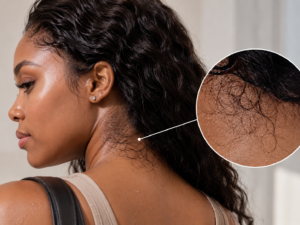
Cause 2: Sweat and Heat
The nape area gets warm quickly. In summer, during workouts, or after a long day, sweat can build up at the back of the neck.
Sweat adds moisture and salt to the hair. When it mixes with friction, product, or dryness, the strands can start sticking together. This can lead to rough tangles that feel almost glued together.
This is why some wigs behave well indoors but tangle badly after commuting, walking outside, or wearing them in hot weather.
Heat does not have to ruin a wig, but it can make nape care more important.
Cause 3: Dry Hair
Dry hair tangles faster.
Human hair wigs no longer receive natural scalp oils the way growing hair does. That means the strands can become dry over time, especially after washing, heat styling, coloring, or repeated wear.
When the hair is dry, the cuticle feels rougher. Rough strands catch on each other, and the nape area becomes the first place you notice it.
This is especially common with longer human hair wigs, blonde or colored wigs, and textured styles.
Cause 4: Overprocessed or Lower-Quality Hair
Sometimes nape tangling is not just a care issue. It can be a quality issue.
Hair that has been heavily processed, coated, steamed, dyed, or mixed may feel soft at first but become rough after a few wears or washes. Once the coating fades, the strands may tangle more easily.
This is why some affordable wigs look beautiful out of the package but start matting at the nape quickly.
If the wig tangles badly even with gentle care, the hair quality or processing may be part of the problem.
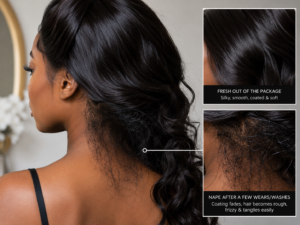
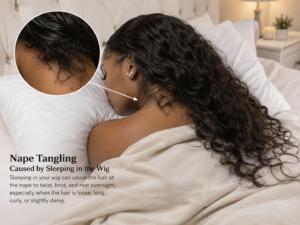
Cause 5: Sleeping in the Wig
Sleeping in a lace wig can make nape tangling much worse.
During sleep, the hair rubs against pillows, blankets, and the back of your neck for hours. If the hair is loose, it can twist into knots. If the wig is long or curly, the matting can be even stronger by morning.
If you must sleep in the wig, use a silk or satin bonnet, wrap the hair loosely, and avoid going to bed with damp hair. But if possible, removing the wig at night is usually better for both the wig and your scalp.
How to Detangle the Nape Safely
Do not rip through nape tangles with a brush.
Start by separating the tangled area with your fingers. Use a light detangling spray or a small amount of leave-in conditioner. Work from the ends upward, not from the roots down.
For straight or body wave hair, a wide-tooth comb can help. For curly textures, finger detangling is often safer. If the knot is tight, take your time and loosen it in small sections.
Pulling too hard can cause shedding, breakage, and thinning at the back of the wig.
How to Prevent Nape Tangling
Prevention is easier than rescue.
Brush or finger-detangle the nape before and after wearing. Keep the hair lightly moisturized, but do not overload it with heavy products. Too much product can create buildup and make the hair sticky.
Try to reduce friction when possible. Avoid rough collars and scarves when wearing longer wigs. If you are wearing a coat, lift the hair over the collar instead of letting it rub underneath.
At night, store the wig on a stand or in a satin bag. Do not throw it into a drawer while tangled.
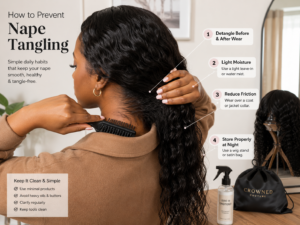
What Products Can Help?
Use lightweight products. Heavy oils and thick creams can make wig hair greasy and attract buildup.
A light leave-in spray, detangling mist, or silicone-free serum may help the strands glide better. For human hair wigs, a gentle conditioner during wash day can also help restore softness.
Be careful with too much water on styled hair. Damp hair can tangle if it is rubbed or worn before drying properly.
The goal is slip, not heaviness.
When Nape Tangling Is a Red Flag
Some tangling is normal. Severe matting is not.
It may be a red flag if:
- The wig mats after one or two wears
- The nape feels rough even after conditioning
- Hair breaks off when detangling
- The tangles return within minutes
- The rest of the wig also feels dry and coated
- The wig sheds heavily when detangled
In those cases, the issue may be hair quality, overprocessing, or a mismatch between the wig and your lifestyle.
Veredicto final
Nape tangling is one of the most common lace wig problems because the back of the wig faces constant friction, sudor, movement, and dryness.
The good news is that it can often be reduced with better habits: gentle detangling, less friction, light moisture, proper storage, and avoiding sleep friction.
But if a wig mats badly with careful use, the problem may go deeper than your routine. Hair quality and processing matter too.
The nape area tells the truth about a wig faster than almost any other part.
Preguntas frecuentes
Is it normal for a wig to tangle at the nape?
Sí, some nape tangling is normal because that area rubs against the neck and clothing. Heavy matting is not normal.
How do I stop my lace wig from matting at the back?
Reduce friction, detangle daily, keep the hair lightly moisturized, avoid sleeping in the wig, and store it properly.
Does nape tangling mean my wig is bad quality?
Not always. Friction and sweat can cause tangling in good wigs too. But severe tangling after very little wear can point to quality or processing issues.
Should I use oil on a tangled wig?
Use oil carefully. Heavy oils can create buildup. A light detangling spray or leave-in product is usually better.
Do curly wigs tangle more at the nape?
They can. Curly and wavy textures catch more easily, especially when mixed with sweat, friction, or dryness.