
Respuesta rápida
You may need scalp protector for lace wigs if you use glue or tape and deal with oily skin, sudor, mild irritation, or lace lifting. It can create a thin barrier between your skin and adhesive. But it is not required for everyone, and it will not fix every problem. If you have strong burning, rashes, swelling, or allergic reactions, stop using the product and seek professional advice.
What Is Scalp Protector?
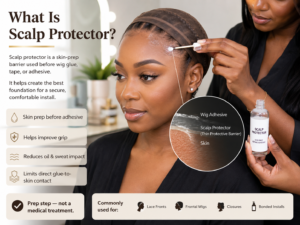
Scalp protector is a skin prep product used before applying wig glue, tape, or adhesive near the hairline.
Its job is to create a light barrier on the skin. This barrier may help adhesive grip better, reduce the effect of oil and sweat, and limit direct contact between the skin and glue.
It is commonly used by people who wear lace fronts, frontal wigs, closures, or bonded installs. Some stylists also use it before long-wear installs to improve hold.
The name can be a little confusing. Scalp protector does not make the scalp invincible. It is a prep step, not a medical treatment.
Why People Use It
People usually try scalp protector for three reasons: hold, comodidad, and skin protection.
If your lace lifts quickly, the issue may be oil, sudor, skincare products, or poor prep. A scalp protector can help create a cleaner surface for adhesive.
If your skin feels sensitive to glue, a barrier may reduce direct contact. This can be helpful for some users, especially around the forehead or temples.
If you sweat easily, scalp protector may help the install last longer than adhesive alone.
But results vary. Skin type, adhesive type, activity level, weather, and installation method all matter.
Who Might Benefit from Scalp Protector?
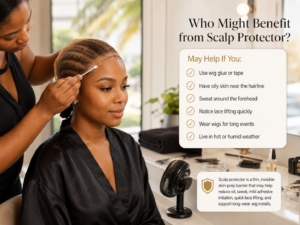
Scalp protector may be useful if you:
- Use lace wig glue or tape
- Have oily skin near the hairline
- Sweat around the forehead
- Experience mild irritation from adhesive
- Notice lace lifting quickly
- Wear wigs for long events
- Live in hot or humid weather
- Need extra skin prep before adhesive
It can be especially relevant in summer, when sweat and oil make lace installs harder to maintain.
Who May Not Need It?
If you wear glueless wigs, you may not need scalp protector at all. A glueless wig relies more on cap fit, bands, clips, peines, or wig grips than on adhesive.
If you only use a small amount of temporary spray for short wear, scalp protector may be optional.
If you have no irritation, no lifting, and no sweat-related hold issues, adding another product may not be necessary.
More products do not always mean a better install. Sometimes a simpler routine works best.
What Scalp Protector Can and Cannot Do
Scalp protector can help create a cleaner barrier for adhesive. It may improve hold for some people. It may reduce minor irritation. It may help with sweat and oil control.
But it cannot make a bad adhesive safe for your skin. It cannot fix a wig that does not fit. It cannot stop lifting caused by poor placement, heavy sweating, or too much product near the hairline.
It also cannot treat allergies. If your skin reacts badly to wig glue, the answer is not always adding another layer. You may need to change products, avoid adhesive, or talk to a dermatologist.
Sensitive Skin and Allergies
Aquí es donde los compradores deben tener cuidado..
Mild discomfort and true allergic reactions are not the same. A little dryness or tight feeling may come from product buildup or removal. Burning, swelling, rash, blistering, or intense itching is more serious.
Always patch test adhesive and prep products before using them along the full hairline. Test on a small area and wait to see how your skin reacts.
If you already know you are sensitive to adhesives, scalp protector may not be enough. A glueless wig may be a safer option.
How It Fits into Skin Prep
Scalp protector works best as part of proper prep.
The hairline area should be clean and dry. Heavy oils, moisturizers, protector solar, and makeup can reduce hold. If you apply scalp protector over product buildup, it may not work well.
A typical routine may include cleaning the skin, letting it dry, applying scalp protector, allowing it to dry fully, and then applying adhesive according to instructions.
The drying step matters. Applying glue too soon can create a messy bond.
Errores comunes
One mistake is using scalp protector as a solution for every lace problem.
If the lace lifts because the cap is too tight or too loose, scalp protector will not solve the fit issue. If the adhesive is applied too close to natural hair, the problem may be placement. If the lace is dirty or oily, it needs cleaning.
Another mistake is layering too many products. Too much scalp protector, pegamento, spray, makeup, and edge control can create buildup and irritation.
Keep the routine as simple as possible while still meeting your needs.
Qué comprobar antes de comprar
Before buying scalp protector, check the ingredients, intended use, drying time, and whether it is designed for wig adhesive.
Look for reviews from people with similar skin concerns: oily skin, sweating, sensitive skin, or lace lifting. Be cautious with claims that sound absolute, such as “stops all irritation” o “guarantees hold for weeks.”
No prep product works the same for every person.
Veredicto final
Scalp protector can be useful, especially for people who use adhesive and struggle with sweat, aceite, mild sensitivity, or lace lifting.
But it is not a must-have for everyone. Glueless wig users may not need it. People with serious reactions should not rely on it as a fix. And no scalp protector can replace clean skin, good fit, proper adhesive use, and gentle removal.
Think of it as a helpful prep tool, not a magic shield.
Preguntas frecuentes
Do I need scalp protector for a glueless wig?
Usually no. Glueless wigs do not depend on adhesive, so scalp protector is often unnecessary unless you use glue or tape.
Can scalp protector stop lace lifting?
It may help if lifting is caused by oil or sweat, but it will not fix poor cap fit, bad placement, or heavy product buildup.
Is scalp protector good for sensitive skin?
It may help some people, but sensitive skin still needs patch testing. Stop using products that cause burning, rash, swelling, or strong irritation.
Do you apply scalp protector before or after glue?
It is usually applied before adhesive, after the skin is clean and dry. Let it dry before applying glue.
Can scalp protector replace adhesive?
No. It is a prep product, not a glue. It may help adhesive work better, but it does not hold the wig by itself.