
Quick Answer
Cheap human hair wigs may shed faster because the hair and construction often have more compromises. The issue is not always the price alone. Shedding can come from weak wefts, loose knots, overprocessed hair, poor ventilation, harsh bleaching, unrealistic density, or rough washing and brushing. A little shedding is normal. Clumps of hair coming out early is not.
Why This Question Matters
Few things are more frustrating than buying a wig that looks good at first and starts shedding within days.
The photos may have looked full. The listing may have said human hair. The price may have seemed like a good deal. Then the brush fills with strands, the lace begins to thin, and the wig no longer feels like the bargain it was supposed to be.
This is one of the biggest buyer pain points in the wig market. People want affordable human hair wigs, but they also want realistic quality. The problem is that “cabelo humano” describes the material, not the full construction standard.
A wig can be human hair and still be poorly made.
Some Shedding Is Normal
First, it helps to separate normal shedding from problem shedding.
All wigs can shed a little. Human hair wigs are made by attaching individual strands to lace or sewing hair into wefts. Some loose strands may come out during brushing, lavar, or first styling. That is not automatically a defect.
Normal shedding usually looks like a few strands here and there.
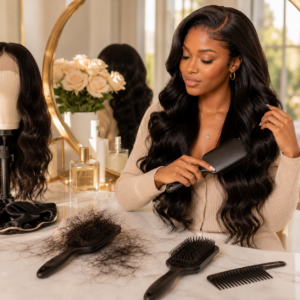
Problem shedding looks different. It may show up as hair coming out in clumps, obvious thinning near the part, lace areas losing hair quickly, or wefts becoming sparse after only a few wears.
If a wig starts losing density before it has been washed or styled much, the issue is probably not just normal use.
Reason 1: Lower-Grade Hair May Be More Fragile
Not all human hair is the same.
Cheaper wigs may use hair that has already been processed heavily before it becomes a wig. The hair may have been dyed, stripped, mixed, steamed, coated, or treated to create a smoother appearance for sale.
At first, this kind of hair can look shiny and soft. After washing, heat styling, or wearing, the coating may fade and the weaker strands may break or shed more easily.
This does not mean every affordable wig is bad. It means buyers should be careful with claims that sound too good for the price: very long length, high density, HD lace, full human hair, and a very low cost all in one product.
Something has to explain the price.
Reason 2: Weak Wefts Can Release Hair
For wigs with wefted tracks, shedding can come from weak stitching or poorly sealed wefts.
If the hair is not secured tightly into the weft, strands may slip out during brushing or washing. Cutting the wefts during customization can also increase shedding if the cut areas are not sealed.
This is why some wigs shed more from the back and sides than from the lace area. The issue may not be the hair itself. It may be how the hair was sewn into the cap.
If you see short hairs and loose strands coming from the tracks, weak wefts may be part of the problem.
Reason 3: Lace Knots May Be Loose
On lace areas, hair is tied or ventilated into the lace. If the knots are loose, poorly tied, or overprocessed, shedding can happen around the hairline, part, or closure area.
Bleached knots can make a wig look more natural, but bleaching also weakens the knot if it is done too aggressively. A cheap wig may try to look premium by offering bleached knots, but if the processing is rushed, the hair can loosen faster.
This is one reason lace areas need gentle care. Scrubbing the lace, brushing hard from the root, or pulling on wet hair can make shedding worse.
Reason 4: Overprocessing Can Weaken the Hair
Many affordable wigs are processed to create a popular color, curl, or texture. Body wave, onda profunda, blonde, highlighted, and colored wigs often go through more treatment than natural black straight hair.
Processing is not always bad. Good processing can create beautiful hair. Poor processing can weaken the strands.
When hair has been stripped, dyed, steamed, or chemically textured, it may become more likely to break, tangle, or shed. This is especially true if the wig is later bleached again, colored again, or heat styled often.
If a cheap wig is very light blonde, very long, very dense, and very low-priced, shedding risk is higher.
Reason 5: Density Claims May Not Match Reality
Density is another place where buyers can be disappointed.
A wig may be advertised as 180% densidade, but the fullness may come from how it is styled in photos, not from strong construction. Some cheaper wigs look full at first because the hair is fluffed, curled, or coated. After washing, the real density may look thinner.
If the wig sheds even a moderate amount, the loss becomes more visible because the starting quality was not strong.
This is why density should be judged with real customer photos, not only studio images.
Reason 6: Care Can Make Shedding Worse
Quality matters, but care still matters too.
Even a decent wig can shed faster if it is brushed roughly, washed with harsh shampoo, slept in without protection, pulled while wet, or styled with too much heat. Curly and wavy wigs need extra care because tangles can turn into shedding when the hair is pulled apart aggressively.
A few habits can help:
- Detangle from the ends first
- Use a wide-tooth comb for waves or curls
- Avoid scrubbing the lace
- Do not brush wet hair from the roots
- Use conditioner carefully and rinse well
- Let the wig air dry when possible
- Store the wig without friction
These steps cannot fix a poorly made wig, but they can prevent unnecessary damage.
What to Check Before Buying
Before buying a cheaper human hair wig, look for signs that the seller is being specific.
Check whether the listing shows real customer photos, inside cap photos, lace close-ups, density after washing, and clear return terms. Read reviews that mention shedding, tangling, smell, lace quality, and how the wig looks after a few weeks.
Be careful with listings that only show perfect curls, no close-up lace, no cap details, and very broad claims like “100% cabelo humano, no shedding, no tangling.” No wig is truly no shedding forever.
More honest listings usually explain the hair type, cap construction, lace area, densidade, and care needs clearly.
When Shedding Is a Red Flag
Shedding becomes a red flag when it is heavy, fast, and concentrated.
Preste atenção:
- Hair coming out in clumps
- Bald spots on lace
- Thin parting area after a few wears
- Tracks losing hair quickly
- Excessive shedding before washing
- Strong tangling followed by breakage
- Lace hairline thinning early
If these happen soon after purchase, the issue may be construction or processing, not your care routine.
Final Verdict
Cheap human hair wigs can be useful, but they require realistic expectations. A lower price often means trade-offs somewhere: hair grade, processing, lace, wefting, densidade, or customization.
The goal is not to avoid affordable wigs completely. The goal is to understand what you are paying for and what risks come with the price.
Some shedding is normal. Fast, heavy shedding is not. If a wig loses hair quickly, the cause is usually a mix of material quality, construction, processing, and care.
The best protection is to buy with your eyes open: check real photos, read specific reviews, and be cautious when a listing promises premium everything at a very low price.
Perguntas frequentes
Is it normal for a human hair wig to shed?
Sim, light shedding is normal. Heavy shedding, clumps, or early bald spots are not normal and may signal construction or quality issues.
Do cheap human hair wigs always shed more?
Not always, but they often carry higher risk because there may be compromises in hair grade, weft stitching, knotting, or processing.
Can washing cause wig shedding?
Sim, rough washing can increase shedding. Scrubbing the lace, pulling wet hair, or using harsh products can loosen strands and weaken the wig.
Why does my lace area shed first?
The lace area may shed first if the knots are loose, over-bleached, or handled roughly during brushing and washing.
Can shedding be fixed?
Minor shedding can sometimes be reduced with gentler care or weft sealing. Heavy shedding from poor construction usually cannot be fully fixed.
Continuar aprendendo
From here, we recommends these next:
- [Link interno para o blog ]O guia completo para perucas de renda
- [Link interno para o blog ]Como instalar uma peruca de renda: O guia passo a passo definitivo (2026)
- [Link interno para o blog ]Guia de densidade de peruca de renda: 130%, 150%, 180% – Qual densidade é certa para você?
- [Link interno para o blog ]O que é uma peruca de renda? Um guia para iniciantes (2026)