
Quick Answer
Lace wigs do not automatically damage your edges, but they can if they are too tight, glued down repeatedly, removed roughly, or secured with combs that pull on the hairline. The risk is higher if your edges are already thin, fragile, or recovering from tension. A lace wig should feel secure, not painful. If your hairline feels sore after wearing it, something needs to change.
Why People Worry About Their Edges
Edges are one of the first areas people worry about when wearing wigs.
That makes sense. The hair around the hairline is usually finer and more fragile than the hair in the middle of the scalp. It also gets the most styling attention: gel, edge control, glue, lace placement, baby hairs, combs, bands, scarves, and daily brushing.
When a lace wig is worn carefully, it can be part of a protective routine. When it is worn too tightly or removed carelessly, it can add stress to the same delicate area again and again.
The goal is not to fear lace wigs. The goal is to understand where the damage risk comes from.
Cause 1: Tight Installs
Tension is one of the biggest risks.
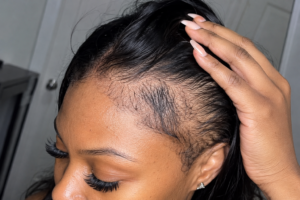
If a wig is too small, the lace may pull backward on the hairline. If the elastic band is too tight, the pressure can sit around the temples and edges. If braids underneath are too tight, the wig may add another layer of stress.
Pain is not a sign of a secure install. It is a warning sign.
A good lace wig should stay in place without creating headaches, soreness, or a pulling feeling around the hairline. If you feel relief the moment you remove the wig, the fit may be too tight.
Cause 2: Rough Glue Removal
Glue is not always the problem. Removal is often the problem.
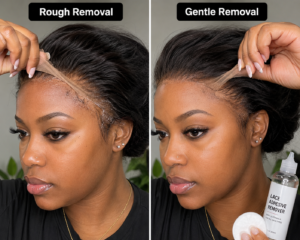
Many edge issues happen when lace is pulled off before the adhesive is fully loosened. If glue is still attached to the skin or tiny hairs, pulling the lace can take hair with it.
Rushing removal is especially risky around the temples, where edges are often thinner. Alcohol-based removers, oils, or adhesive removers may be used depending on the product, but the key is patience.
If the lace does not lift easily, it is not ready to come off.
Cause 3: Adhesive Too Close to the Hairline
Lace adhesive should usually be applied on clean skin, not directly on natural hair.
When glue sits on edges, removal becomes harder. Product buildup can also collect around the hairline, making the area dry, sticky, or irritated.
People with low hairlines or dense baby hairs may need extra care with placement. The wig should not require sacrificing your natural edges to look natural.
If adhesive regularly touches your real hair, the install method may need adjusting.
Cause 4: Combs and Clips Pulling
Wig combs can help with security, but they can also cause tension.
Front combs are a common issue. If they dig into the hairline or pull on fragile edges, they may create soreness or breakage over time. Side combs can also stress the temples if they are placed too tightly.
Not everyone needs to use every comb in a wig. Some people remove front combs, avoid using them, or switch to a wig grip instead.
Security should not come from grabbing fragile hair.
Cause 5: Wearing the Same Tension Points Every Day
Even mild tension can become a problem if it happens in the same place every day.
If a band presses at the temples daily, or a comb sits in the same spot, the hair can weaken over time. The same applies to tight braids underneath a wig.
This is why rest days matter. Changing styles, loosening tension, and giving the hairline time to recover can help reduce long-term stress.
Your edges need breaks too.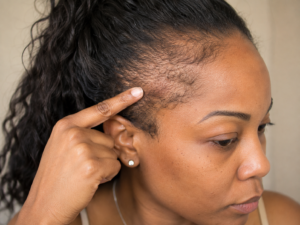
Signs Your Wig May Be Stressing Your Edges
Pay attention to early warning signs:
- Soreness after removing the wig
- Tender temples
- Small bumps along the hairline
- Broken hairs at the front
- Edges looking thinner over time
- Redness or irritation
- Pain during removal
- Hair stuck in glue or tape
If you notice these signs, do not ignore them. The earlier you adjust the routine, the easier it is to protect the hairline.
How to Protect Your Edges
Start with fit. A wig that is too small or too tight will keep creating problems.
Use a flat but comfortable foundation underneath. Braids should not be painfully tight. Avoid placing combs directly into fragile edges. If you use adhesive, keep it on skin rather than hair and remove it slowly with the correct remover.
Also consider alternating install methods. You do not have to wear glue every day. Glueless wigs, wig grips, adjustable bands, or short-wear installs may be better for some routines.
Most importantly, stop treating pain as normal.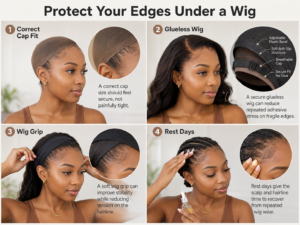
When to Avoid Glue
If your edges are already thinning, irritated, or recovering, it may be smart to avoid strong adhesive for a while.
This does not mean you can never wear lace wigs. It means your install should be gentler. A glueless wig, closure wig, or low-tension style may be more comfortable while your hairline rests.
If there is ongoing hair loss, inflammation, or scalp pain, a dermatologist or hair specialist can give better guidance than a product label.
Final Verdict
Lace wigs can be worn safely, but they need the right fit, careful placement, and gentle removal.
Most edge damage comes from repeated tension, rough adhesive removal, glue on natural hair, tight bands, or combs pulling at the hairline. These are preventable habits, not unavoidable parts of wearing wigs.
A good wig routine should protect your look and your hairline.
If your edges are paying the price for the install, the install needs to change.
Perguntas frequentes
Do lace wigs always damage edges?
Não. Lace wigs do not always damage edges. Problems usually come from tight installs, rough removal, adhesive misuse, or repeated tension.
Is glue bad for edges?
Glue can be risky if it touches natural hair or is removed roughly. Careful placement and gentle removal are important.
Are glueless wigs better for edges?
They can be gentler because they reduce adhesive use, but they still need a comfortable fit. A tight glueless wig can still cause tension.
Should I use wig combs near my edges?
Be careful. Front combs can pull on fragile hair. Some people avoid them or use a wig grip instead.
What should I do if my edges hurt after wearing a wig?
Stop wearing that install method until you identify the cause. Check cap size, band tension, comb placement, tranças, and adhesive removal.