
Réponse rapide
Raw hair is usually the most expensive, but it is not automatically the best choice for every buyer. Virgin hair can be a strong middle option when the processing history is clear. Remy hair can also be practical if the cuticles are aligned and the hair is not overly processed.
The problem is that wig sellers do not always use these terms consistently. A label like raw, vierge, raw virgin, 10UN, or 12A should not be treated as proof. You need to look at how the hair behaves, how it was processed, and what the seller is willing to explain.
What Do Raw, Vierge, and Remy Mean?
These words are often used together, but they do not mean the same thing.
Remy hair means the hair cuticles are kept aligned in the same direction. This helps reduce tangling because the outer layer of the hair does not rub against itself in opposite directions.
Virgin hair usually means the hair has not been chemically processed, dyed, bleached, permed, or relaxed. In real-world wig marketing, the term may be used loosely, so it still needs verification.
Raw hair usually means hair that is minimally processed and closer to its original state. It is often marketed as coming from one donor or fewer donors, with natural texture variation. True raw hair is usually limited, expensive, and less uniform than heavily processed hair.
Why Buyers Compare These Hair Types
Most buyers compare raw, vierge, and Remy hair because they want to understand price. A wig that says raw hair may cost much more than a regular human hair wig. A virgin hair wig may promise better coloring potential. A Remy wig may claim less tangling.
The real question is not which label sounds best. The real question is what you need the wig to do.
If you want to bleach the hair lighter, processing history matters. If you want low tangling for daily wear, cuticle alignment matters. If you want a natural texture that lasts, donor quality and processing matter. If you want an affordable everyday wig, a well-made Remy wig may be more practical than an expensive raw wig with vague sourcing.
Comparaison côte à côte
| Facteur | Raw Hair Wig | Virgin Hair Wig | Remy Hair Wig |
|---|---|---|---|
| Main meaning | Minimally processed hair | Hair not chemically processed | Cuticles aligned in one direction |
| Prix | Usually highest | Moyen à élevé | Low to high |
| Texture | May have natural variation | Can be natural or steam styled | Often more uniform |
| Coloring potential | Often strong if authentic | Usually strong if authentic | Depends on processing |
| Risque d'emmêlement | Low if cuticles are intact | Low to medium | Low if truly Remy |
| Consistency | Less uniform | Moyen | Often more uniform |
| Idéal pour | Long-term wear, custom color, premium buyers | Buyers who want quality without highest raw price | Everyday wear and practical value |
Raw Hair Wigs: Benefits and Limits
Raw hair can be appealing because it may be less chemically processed and more durable when sourced well. It can also hold a natural texture and respond better to coloring than hair that has already been heavily treated.
But raw hair is not magic. It can still shed if the wig is poorly ventilated. It can still tangle if the cuticles are damaged. It can still look fake if the lace, naissance des cheveux, densité, or cap construction is wrong.
Raw hair also may not look as perfectly uniform as processed hair. That is not always a defect. Real hair from fewer donors may have slight texture variation. Buyers who expect every strand to look identical may prefer a more processed but consistent wig.
Virgin Hair Wigs: Benefits and Limits
Virgin hair is usually attractive to buyers who want quality human hair that can be dyed, styled, and worn for a longer period. If it truly has not been chemically processed, it may be stronger than hair that has been bleached, acid washed, silicone coated, or steam textured heavily.
The challenge is proof. Many wigs are marketed as virgin hair even when the hair has been lightly processed or steam styled. This does not always mean the wig is bad, but it does mean the word virgin should not be the only reason you pay more.
Virgin hair also does not guarantee cuticle alignment. Hair can be unprocessed but still mixed poorly. If cuticle direction is inconsistent, tangling can still happen.
Remy Hair Wigs: Benefits and Limits
Remy hair is about cuticle direction. When cuticles run the same way, the hair is less likely to mat and tangle. This makes Remy hair useful for everyday wigs, especially for buyers who want manageable hair without paying the highest raw hair price.
Cependant, Remy does not always mean unprocessed. Remy hair can be colored, steamed, or treated. A Remy wig can be good or poor depending on how much processing it has gone through and whether the cuticles are still intact.
For many buyers, a well-made Remy wig is better value than a poorly verified raw wig.
Single-Donor vs Multi-Donor Hair
Single-donor hair means the hair is collected from one person. In theory, this can create more consistent cuticle direction, texture, and quality. It is also harder to source in large quantities, so it costs more.
Multi-donor hair means hair from multiple people is blended. This is common in commercial wigs. It can still be good quality when the hair is sorted carefully, aligned correctly, and not overprocessed.
Do not assume single-donor is always real just because a seller says it. Ask what makes the claim verifiable. If a seller cannot explain sourcing, traitement, and texture consistency, the label may be mostly marketing.
Chemical Processing and Steam Texture
Many wigs are processed to create a consistent texture. Body wave, vague profonde, kinky curly, and straight textures may be steam styled or chemically treated to achieve a uniform look.
Processing is not always bad. It can make the wig more predictable and easier to match product photos. But heavy processing can weaken the hair, reduce coloring ability, and increase dryness or tangling.
If you plan to bleach or dye the wig, processing history becomes very important. Hair that has already been treated may not lift evenly or safely.
How to Tell If the Hair Quality Is Real
No home test is perfect, but you can look for warning signs.
Hair that tangles badly after a few wears may be non-Remy, overprocessed, or coated with silicone that washed away. Hair that sheds heavily from the lace may point to weak knots or poor ventilation. Hair that feels very soft at first but becomes dry and rough after one wash may have been coated.
Ask for natural-light videos, close-ups after washing, and clear return terms. A trustworthy seller should be able to explain the difference between the hair label and the actual construction of the wig.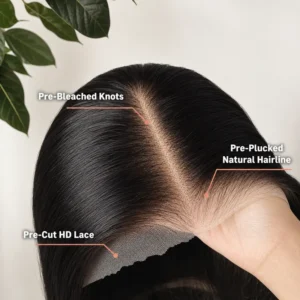
Ce que les vendeurs ne peuvent pas expliquer
Terms like raw virgin hair, 12A grade, premium human hair, and unprocessed donor hair are not standardized in the wig industry. Different sellers may use the same term in different ways.
Also, hair quality is only one part of wig quality. A raw hair wig with thick knots, poor lace color, a bad cap fit, or weak ventilation may still disappoint. A good wig needs quality hair and good construction.
Que vérifier avant d'acheter
- Ask whether the hair is raw, vierge, Rémy, ou traité, and what that means for that seller.
- Ask whether the texture is natural, steam styled, or chemically processed.
- Check whether the hair can be dyed or bleached, and whether that affects warranty.
- Look for reviews after washing, not only unboxing photos.
- Compare shedding and tangling feedback.
- Ask whether the wig is single-donor or multi-donor, but do not rely on the claim alone.
- Check lace type, noeuds, densité, cap size, and return policy.
Who Should Choose Each Type?
Choose raw hair if you want a premium wig, plan to wear it long term, may custom color it, and can verify the seller’s quality.
Choose virgin hair if you want strong human hair with good styling flexibility but do not necessarily need the highest-priced raw option.
Choose Remy hair if you want practical everyday wear and reduced tangling, especially when budget matters.
Avoid paying extra for any label if the seller cannot explain processing, cuticle direction, donor claims, or after-wash performance.
Verdict final
Raw, vierge, and Remy are useful terms, but they are not enough by themselves. Raw hair often costs the most and can be excellent when authentic. Virgin hair can be a strong quality choice. Remy hair can be the best value for many everyday wig buyers.
The smartest buyer does not ask only, “Is it raw?” The better question is, “What exactly has been done to this hair, and how will it behave after washing, styling, and wearing?”
FAQ
Is raw hair better than virgin hair?
Not always. Authentic raw hair is usually less processed and more expensive, but a well-made virgin hair wig can be more practical if the sourcing and construction are reliable.
Is Remy hair real human hair?
Remy hair is usually human hair with cuticles aligned in the same direction. The term describes cuticle direction, not whether the hair is unprocessed.
Can virgin hair be Remy?
Oui. Hair can be both virgin and Remy if it is unprocessed and the cuticles are aligned. But sellers may not always use these labels accurately.
Why is raw hair so expensive?
Raw hair is harder to source, often less processed, and may come from fewer donors. The price should reflect sourcing and quality, not just a label.
What hair type is best for a beginner wig?
Many beginners do well with a quality Remy or virgin hair wig because it offers a balance of manageability, price, et flexibilité de style.