
Réponse rapide
You can dye some human hair wigs at home, but you should be careful. Darkening a wig is usually safer than bleaching it lighter. Bleach can dry out the hair, loosen knots, increase shedding, and damage the lace area if handled poorly. If the wig is expensive, already processed, blonde, bouclé, or fragile, professional coloring may be safer than experimenting at home.
Why Wig Coloring Is Risky
Coloring a wig is not the same as coloring hair growing from your scalp.
Human hair wigs do not receive natural oils from the scalp. Once the hair becomes dry or damaged, it cannot repair itself the same way growing hair can. A wig also has lace, noeuds, wefts, and cap construction that can be affected by chemicals.
This does not mean you can never color a wig. Many people do. But the risk depends on the starting quality of the hair and how dramatic the color change is.
The bigger the change, the bigger the risk.
Dyeing vs Bleaching
Dyeing and bleaching are not the same.
Dyeing usually means adding color or making the hair darker. This is often less damaging because you are depositing color rather than lifting pigment.
Bleaching means removing pigment to make the hair lighter. This process is stronger and can weaken the hair. It can also affect knots and lace if applied carelessly.
Going from natural black to dark brown is very different from going from black to platinum blonde.
If you are new to wig coloring, start with small, low-risk changes.
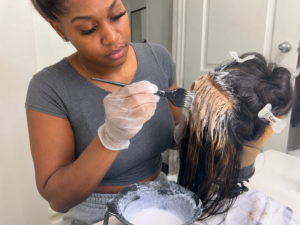
Check the Wig Quality First
Not every human hair wig handles color well.
Some wigs are made from higher-quality hair that can tolerate gentle coloring. Others may already be heavily processed, coated, dyed, or mixed. These wigs can become dry, tangled, or shed after chemical treatment.
Before coloring, check how the wig behaves after washing. If the hair already tangles, sheds, feels rough, or loses softness quickly, coloring may make the problem worse.
Hair that looks shiny out of the package is not always strong enough for bleach.
Do a Strand Test
A strand test is one of the most important steps.
Choose a small hidden section of hair and apply the color or bleach according to the product instructions. Watch how the hair reacts. Does it become gummy? Does it break? Does it turn the color you expected? Does it feel dry after rinsing?
A strand test cannot guarantee the whole wig will behave perfectly, but it can warn you before you damage the entire unit.
Skipping this step is a common mistake.
Be Careful Around Lace and Knots
The lace area needs special care.
Bleach or dye can stain lace, weaken knots, or make shedding worse if it sits too long. This is especially important around the hairline and parting area.
If the wig has already been bleached at the knots, adding more bleach can increase risk. Overprocessed knots may loosen, causing hair to shed from the lace.
If your goal is only to change the hair color, avoid soaking the lace area unnecessarily.
Curly and Textured Wigs Need Extra Caution
Curly, kinky, and wavy wigs can be more sensitive to chemical changes.
Bleach can loosen curl patterns, create dryness, and make tangling worse. Even if the color looks good, the texture may not behave the same afterward.
This is why major lightening on curly wigs is risky. You may get the color but lose the softness or curl definition you liked.
If the texture is the reason you bought the wig, think carefully before bleaching it.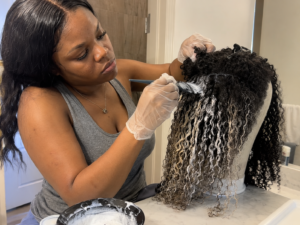
What Color Changes Are Safer?
Safer changes usually include:
- Black to dark brown
- Brown to deeper brown
- Adding a darker rinse
- Toning slight brassiness
- Refreshing faded color
- Depositing color without strong lift
Riskier changes include:
- Black to blonde
- Dark hair to bright color
- Multiple bleach sessions
- Bleaching knots again
- Coloring already damaged hair
- Bleaching curly or highly processed wigs
The safest color plan is usually the one that works with the wig, not against it.
Erreurs courantes
One mistake is expecting a cheap wig to handle bleach like premium salon hair.
Another mistake is coloring the entire wig without testing. Some people also leave bleach on too long, use high-volume developer, or process the wig multiple times in one day.
Rough washing after coloring can make damage worse. The hair should be handled gently, conditioned well, and dried carefully.
If the hair starts feeling gummy, stretchy, or breaking, stop processing.
When to Go to a Professional
Consider professional help if you want a major color change, highlights, blonde results, balayage, or color correction.
A stylist or colorist who understands wigs can protect the lace, manage processing time, and reduce damage risk. This is especially important for expensive wigs.
Professional coloring costs more, but replacing a ruined wig can cost more than that.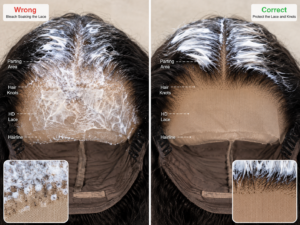
Verdict final
You can dye some human hair wigs at home, but bleaching is where the risk increases.
If you want a small, darker color change, the process may be manageable with care. If you want to lift dark hair several levels, bleach a curly wig, or color an expensive unit, think carefully before doing it yourself.
The best approach is slow and cautious: check the wig condition, do a strand test, protect the lace, use gentle methods, and avoid unrealistic color jumps.
A wig can survive color. It may not survive careless color.
FAQ
Can all human hair wigs be dyed?
No. Some human hair wigs handle dye better than others. Hair quality and previous processing matter a lot.
Is bleaching a wig risky?
Oui. Bleaching is riskier than depositing darker color because it weakens the hair and can affect knots or lace.
Can I dye a synthetic wig?
Most synthetic wigs cannot be dyed with regular human hair dye. They need different methods and may not take color well.
Should I wash the wig before dyeing it?
Often yes, especially if there is product buildup. The hair should be clean, but not aggressively stripped or damaged before coloring.
What should I do if the wig feels dry after coloring?
Use a gentle conditioner, reduce heat styling, detangle carefully, and avoid more chemical processing until the hair condition improves.