
Respuesta rápida
If your wig part looks too wide, do not start plucking more hair. A wide part often means too much hair has already been removed, the lace is showing through, or the part area has lower density than expected.
The fastest safe fix is to narrow the visible part with a root touch-up powder, lace tint, or a small amount of concealer matched to your scalp. For a longer-term fix, you may need professional knot work, added hair ventilation, or a different wig with better density around the parting area.
What Is a Normal Wig Part Supposed to Look Like?
A natural wig part should show a slim line of scalp or lace between two sections of hair. It should not look completely closed, because real scalp usually shows at the part. But it also should not look like a wide strip of exposed lace.
The best-looking part has three things working together:
- Enough hair density on both sides of the part
- A lace color that blends with the wearer’s skin
- Knots and roots that do not look too dark, bulky, or sparse
A slightly visible part can be normal. A part that looks like a bald patch, a trench, or a long empty line usually means something is off.
Why Buyers Notice This Problem
Many buyers focus on the hairline before purchasing a lace wig, but the parting area matters just as much. A wig can have a pretty hairline and still look fake if the middle part is too wide.
This is especially frustrating with expensive wigs. Buyers may assume a higher price means the part will automatically look realistic, but lace quality, ventilation, densidad, knot size, and finishing all matter. A costly wig can still have a parting area that looks over-plucked or poorly balanced.
9 Reasons Your Wig Part Looks Too Wide
1. The Part Was Over-Plucked
Over-plucking is one of the most common reasons a wig part looks bald. Plucking removes hair from the lace to make the part look less bulky. But when too much hair is removed, the part becomes too open.
A good part should look soft, not empty. If you can see a wide band of lace from the front to the crown, the part may have been over-plucked.
2. The Wig Has Low Density Around the Part
Overall wig density and parting density are not always the same. A wig can be labeled 180% density and still have a sparse part if too little hair was ventilated into that area.
This is why density percentages can be misleading. The number describes the wig as a whole, not always the exact amount of hair around the part, crown, or hairline.
3. The Lace Color Does Not Match Your Scalp
Sometimes the part is not actually too wide. It only looks too wide because the lace color contrasts with your skin.
If the lace is too light, too gray, too peach, or too dark, the part line becomes more obvious. Under bright light, flash photography, or direct sunlight, mismatched lace can make the part look wider than it is.
4. The Knots Are Too Dark or Too Visible
Dark knots can create a dotted effect along the part. Instead of looking like hair growing from the scalp, the wig may look like hair sitting on top of a net.
Bleached knots can help, but over-bleaching can weaken the roots and increase shedding. That is why knot work needs balance: invisible enough to look natural, but not so processed that the lace area becomes fragile.
5. The Part Is Too Straight and Sharp
A perfectly straight part can sometimes look less natural than a slightly irregular one. Real hair rarely parts in a ruler-straight line from front to back.
If the part is very straight, very flat, and very exposed, the eye reads it as artificial. A softer part with small root movement usually looks more believable.
6. The Roots Are Too Flat
When the hair around the part lies completely flat against the lace, the part can look wider. Natural hair usually has some root lift, even when it is sleek.
Hot combing can help, but too much heat and pressure can flatten the roots even more. The goal is controlled direction, not pressed-down hair with no volume.
7. Product Buildup Is Separating the Hair
Heavy mousse, gel, holding spray, edge control, aceite, or lace glue residue can cause hair around the part to separate into clumps. When the hair separates, more lace shows.
This can make a normal part look sparse. If the part looked better when the wig was new but now looks wider, buildup may be part of the problem.
8. The Hair Is Shedding Near the Part
If the part keeps getting wider over time, shedding may be happening in the lace area. This can happen from rough brushing, bleach damage, scratching, pulling, eliminación de adhesivo, or weak knots.
Shedding near the part is harder to hide than shedding in the lengths because the lace is visible. Once too much hair is lost from the parting area, temporary makeup fixes may not be enough.
9. The Part Placement Does Not Suit the Wig
Some wigs are made to part best in a certain area. If you force a deep side part on a closure wig with limited parting space, the hair may not fall naturally.
A middle part, side part, and curved part can all reveal different amounts of lace. Before deciding the wig is defective, test a few part placements with light styling.
Over-Plucking vs Normal Ventilation
Normal ventilation means individual hairs are tied into the lace with enough spacing to create a scalp-like effect. The part may show lace, but the hair on both sides should still look balanced.
Over-plucking means too many hairs have been removed, usually in a continuous line. It may look like a clean but overly wide strip. In severe cases, the part may look like hair loss rather than a natural scalp line.
Here is the difference:
| Sign | Normal Part | Over-Plucked Part |
|---|---|---|
| Width | Slim, scalp-like line | Wide exposed strip |
| Hair on both sides | Balanced | Sparse or uneven |
| Lace visibility | Blends into scalp | Stands out clearly |
| Fix difficulty | Easy styling adjustment | May need color correction or re-ventilation |
| Risk if plucked more | Low if minimal | High |
Safe Temporary Fixes
The safest temporary fixes add color, shadow, or root softness without removing more hair.
Use a root powder or matte eyeshadow close to the hair color to soften the edges of the part. Apply lightly on both sides of the part, not directly down the middle. This makes the part look narrower without making it muddy.
Use a scalp-colored powder or concealer only if the lace is too dark or uneven. Blend carefully and avoid thick, wet product that can cake on the lace.
Try a slightly off-center or curved part. A small change in direction can reduce the appearance of a harsh line.
Add gentle root lift with a hot comb or blow dryer on low heat. Do not press the hair completely flat against the lace.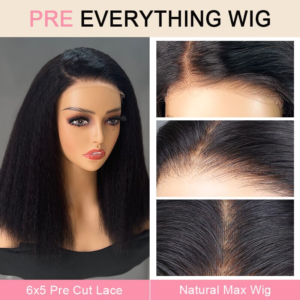
Longer-Term Fixes
If the part is seriously over-plucked, the best long-term fix may be professional re-ventilation. This means adding hair back into the lace area. It is more realistic than trying to cover a large empty part with makeup every time.
If the problem is lace color, lace tint may help. Choose a tint that matches your scalp or foundation shade, not just your face tone.
If the knots are too dark, professional knot bleaching may help, but only if the lace and hair can tolerate it. Bleaching an already fragile or shedding wig can make the problem worse.
If the wig is new and the parting issue is extreme, contact the seller before altering it. Plucking, cutting lace, bleaching knots, or applying heavy product may affect return eligibility.
What Not to Do
Do not pluck more hair from a part that already looks too wide. This is the fastest way to turn a fixable issue into permanent damage.
Do not cover the part with thick foundation. Heavy makeup can collect in the knots, stain the lace, and make the part look chalky.
Do not use strong glue or spray to force the part flat. Adhesive can create buildup and cause shedding around the lace.
Do not bleach knots repeatedly. If the knots do not lift after one careful session, more bleaching may weaken the roots.
What Sellers May Not Explain
Some product pages use words like pre-plucked, natural part, scalp-like, or realistic ventilation without showing close-up photos of the parting area. These terms are helpful only when the construction is actually balanced.
A pre-plucked wig is not automatically better. If it is over-plucked, the part may look too wide before you even install it.
Also, density photos can be misleading. A wig shown from the front may look full, while the parting area may still be sparse. Ask for close-up photos of the hairline, parte, crown, and lace against skin whenever possible.
Qué comprobar antes de comprar
- Ask for a close-up parting photo in natural light.
- Check whether the part is pre-plucked or customizable.
- Look for lace color options that match your scalp.
- Ask whether knots are bleached or only lightly processed.
- Check return rules before cutting lace or customizing the wig.
- Compare the part area with the crown, not only the front hairline.
- Avoid listings that rely only on filtered or distant photos.
Veredicto final
A wig part that looks too wide is usually caused by over-plucking, low parting density, visible lace, dark knots, or styling that exposes too much lace. The fix depends on the cause.
If the issue is color or styling, root powder, lace tint, and a softer part can help quickly. If the lace area has already lost too much hair, professional re-ventilation or a seller resolution may be the better path.
The main rule is simple: if the part already looks bald, do not remove more hair.
Preguntas frecuentes
Can I make a wig part smaller?
Sí, you can make it look smaller with root powder, lace tint, a curved part, or light styling. If too much hair is missing, only added ventilation can truly restore the part.
Is a wide wig part always over-plucked?
No. It can also be caused by lace color mismatch, low density, product buildup, or hair lying too flat. Check the part in natural light before deciding.
Should I bleach knots if my part looks too wide?
Only if dark knots are the main issue. If the part is already sparse, bleaching may weaken the lace area and make shedding worse.
Why does my expensive wig look like it is balding?
Price does not guarantee balanced ventilation. A wig can have good hair quality but still have a poorly finished part, sparse density, or over-plucked lace.
Can I return a wig because the part is too wide?
It depends on the seller’s policy. Contact the seller before cutting lace, punteo, bleaching, teñir, or using makeup, because customization may affect returns.